
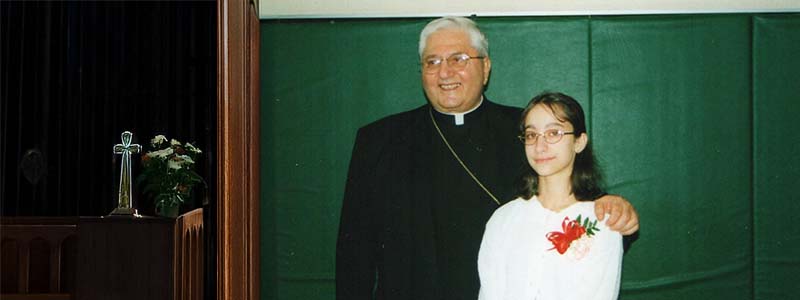
In my last post, I wrote about a time that I hid in the bathroom and wished I could disappear. By 13, I’d come out from behind the toilet, but I was still hiding. The moment people around me seemed unhappy, my mind started down a familiar track: “My existence gets in the way of people’s happiness,” I believed. “I should stay quiet and stay out of the way. When I’m invisible, everyone is better off.”
Around the neighborhood, I earned the nickname, “Inside Girl,” and I lived up to it. I felt ugly and uncool, which made it hard to speak up or make eye contact with my peers. My room at home was my sanctuary. I had a compulsive habit of incessantly checking that the doorknob was locked, but once I felt safe, I exhaled and spent my time alone drawing, reading, and studying.
In 7th grade, I was Confirmed in the Catholic Church. It felt like an important day. My catechism classmates and I had to take a test on the Catholic religion before we could be confirmed, and I aced it. My teacher was proud of me and asked if I’d considered the religious life. I had, but I still wondered if it was possible to follow a call from God without becoming a nun.
I regularly prayed the Rosary and meditated on the Stations of the Cross. Although I was overcome with gratitude and sorrow that Jesus would suffer for my sins, I was also puzzled that his crucifixion wasn’t enough. My catechism teachers taught that there was no guarantee of Heaven. I believed I would die with unrepented sin and exist in Purgatory until loved ones still on earth prayed my soul out of there.
A Friend and a Youth Group
Despite my social awkwardness, God gave me a friend I’ll call Kay. She was just as shy as I was, and she invited me to her youth group at an Assemblies of God church. I wasn’t sure if it was wrong for me to attend as a Catholic, but my parents were so happy that I made a friend that they nearly pushed me out the door.
Entering the fellowship hall where the youth group was held, I was at first appalled by the irreverent behavior of teens laughing, running around, and playing games. I also wondered how this building could be called a “church” without stained glass windows and organ music.
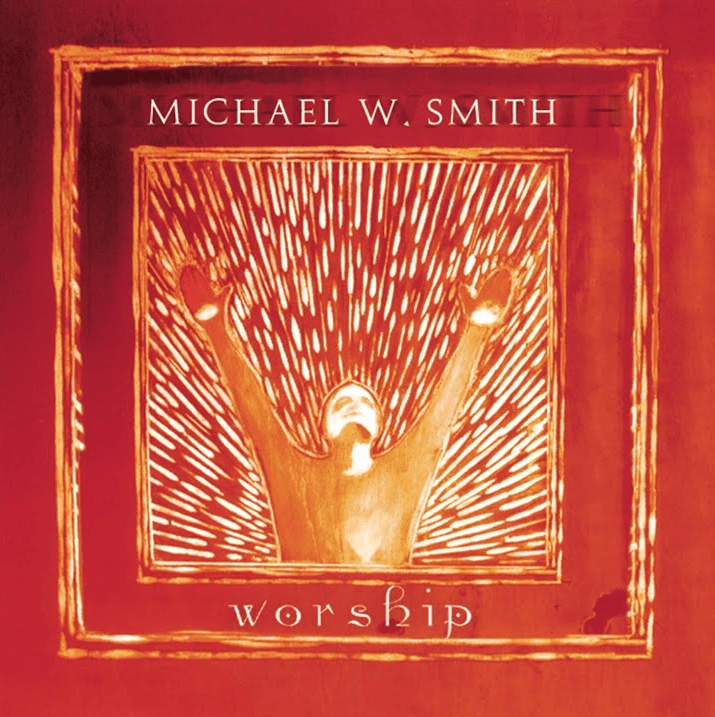
My attitude shifted, however, when the service began and the teen worship band started playing. Many of the students standing around me raised their hands in a posture of praise—I’d never seen that before. Then the worship team led us in the song “Above All” by Michael W. Smith, and the chorus did me in:
Crucified / Laid behind the stone / You lived to die / Rejected and alone
Like a rose / trampled on the ground / You took the fall / And thought of me / Above All
Contemplating the crucifixion, I was overcome with sorrowful tears, trembling on my knees just as if I were at home praying the Rosary. I was accustomed to feeling invisible, and figuring no one noticed, I didn’t feel self-conscious. When it was time to sit down, my face was soaked and my eyes were red. Kay handed me a tissue.
The Youth Pastor came to the mic in blue jeans and spiked hair. He talked about the Bible in surprising ways, as if it was something that could apply to my life today, not just a history lesson. At the end, he asked us to bow our heads and close our eyes.

“If you’re here tonight and you aren’t sure if you would go to heaven when you die, I want you to raise your hand. No one is looking around.”
This was an altar call… but I didn’t know that. I thought this was a pop quiz. As far as I knew, the correct answer was “There is no certainty of heaven.” So, I raised my hand.
“I see that hand,” he said.
And then I was struck with terror. Why didn’t anyone else raise their hand? Did I misunderstand the question? What’s going on?
Hearing The Gospel
After the benediction, the Youth Pastor called me aside and asked if I’d like to say the sinner’s prayer. I told him I knew I was a sinner already, and instead hit him with a barrage of theological questions regarding assurance of salvation, prayer, transubstantiation of the Eucharist, and so on.
After some back and forth, I still had lots of questions. But one important matter in my heart was settled. He helped me to understand the meaning of John 3:16, “For God so loved the world, that he gave his only Son, that whoever believes in him should not perish but have eternal life” (ESV).
From what I recall, he said something along these lines, “Think about it. Why would God go through the trouble of sending His Son to Earth to die on a cross and defeat the grave if it wasn’t enough to wipe out the Old Covenant with all of those sacrifices people had to make?” he asked. I didn’t have an answer, so he continued, “I want you to understand that Jesus’ death on the cross was enough to pay for your sin. You don’t need to commit to rituals or worry about not making it into Heaven. Romans 10, verse 9 says, ‘If you confess with your mouth that Jesus is Lord and believe in your heart that God raised him from the dead, you will be saved.’ Repent, confess, and believe—then you’re part of God’s family. Jesus did the rest. Does that make sense? Would you like to pray with me?”
I thought about it silently for another moment. And I nodded.
What About You?
What do you think about the idea of sin and Jesus paying the penalty for it? If you’re a Christian, what was it like for you when you first repented?
 Michelle Perez
One thought on “My Testimony, Part II: Teen Years”
Comments are closed.