

When it comes to healing from spiritual hurt, there’s no better guide than the Good Shepherd Himself. Jesus said, “I am the good shepherd. The good shepherd lays down his life for the sheep” (John 10:11). In His words and actions, we see what true servant leadership looks like. In this series of posts, we’ll draw wisdom from three places: the heart of Jesus, insights from real-world shepherding, and some personal reflections. I’ll also share resources from trusted authors who’ve thought deeply about this subject.
Why This Topic?
If you know me as Jesus-loving Michelle who spends a lot of time doing church-y things, you may wonder why I’m writing on this topic. There are a few reasons.

First, it’s hard to be a church-goer for any length of time without experiencing some measure of hurt.
The Church is made up of imperfect sinners saved by grace, who sometimes wound one another and need forgiveness (Col. 3:13). Just like all other spheres of life, we find a spectrum of pain that happens in churches, from minor squabbles to serious spiritual abuse.
To be clear, the motivation to write this post doesn’t stem from my experience at any one particular church. Throughout my lifetime, I’ve been part of six different congregations: from a Catholic parish as a child, to charismatic churches, to non-denominational, and now our family is involved in a church in the Wesleyan Holiness tradition. At the same time, I’m part of an apologetics ministry with Reformed theology. (If you’re thinking, “Wow, this chick is all over the place,” I’ll give you that.) And you know what I’ve realized? There are qualities to be treasured in all of these gatherings of believers.
On the downside, though, the issue of sheep and shepherds hurting one another isn’t derived from the stream of doctrine from which they drink. Michael J. Kruger says it so well in the introduction to his book, Bully Pulpit:
“The temptation, of course, is to think this problem is always in other churches or denominations. We tend to think our little slice of evangelicalism has taken the right steps or has the proper theology to keep spiritual abuse from happening. They are the ones with bully pastors, not us. But I have come to realize this is not the case. Even the denominational tribes that we might consider the most theologically solid and the most doctrinally faithful are not immune to this problem. Rather, it is sometimes precisely these groups that are most vulnerable because they often presume from the outset that the purity of their pastor’s doctrine must somehow guarantee the purity of their pastor’s character. Perhaps a little more humility about the former may have occasioned a little more self-reflection about the latter.”
Kruger, Michael J. Bully Pulpit: Confronting the Problem of Spiritual Abuse in the Church (p. xv). Kindle Edition.
Kruger’s work primarily addresses pastors who abuse their power, but as we know, sometimes sheep bully their pastors, too. When I came across his words above, it felt like the missing piece of my healing-and-moving-on puzzle. Over the years, I thought refining my theology would guarantee that I’d behave better, and so would my fellow sheep and my shepherds. I was mistaken. There’s no direct correlation between seminary degrees and bearing the fruit of the Spirit. Although education is a blessing, we can’t lose sight of Jesus’ exhortation to maintain childlike faith (Matt. 18:3, Mark 10:15).

Secondly, I love the Church, the Bride of Christ.
I want Jesus to be pleased with his bride when he returns (Eph. 5:25–27). God never intended our faith to be lived in isolation. Scripture reminds us, “And let us consider how to stir up one another to love and good works, not neglecting to meet together, as is the habit of some, but encouraging one another…” (Heb. 10:24–25, ESV). The Lord entrusts us with abilities and spiritual gifts for serving the body. They’re no good if we keep them to ourselves (Matt. 25:14-30; 1 Cor. 12:7).
Sure, it’s risky business joining a faith community and allowing ourselves to love and be loved. As C.S. Lewis wrote, “To love at all is to be vulnerable. Love anything, and your heart will certainly be wrung and possibly be broken” (C.S. Lewis, The Four Loves, 1960). However, this is precisely the kind of sacrificial love that Jesus modeled.


Third (this one is a little out there), I have a border collie.
I enjoy watching videos of herding dogs in action in my spare time. Our suburban home isn’t zoned for farm animals, so there isn’t much to herd here besides squirrels, kids in the yard, and Amazon trucks. When I watch those videos, though, and shepherds pause to give practical advice, I can’t help but make connections to the shepherd and sheep metaphor we see throughout Scripture.
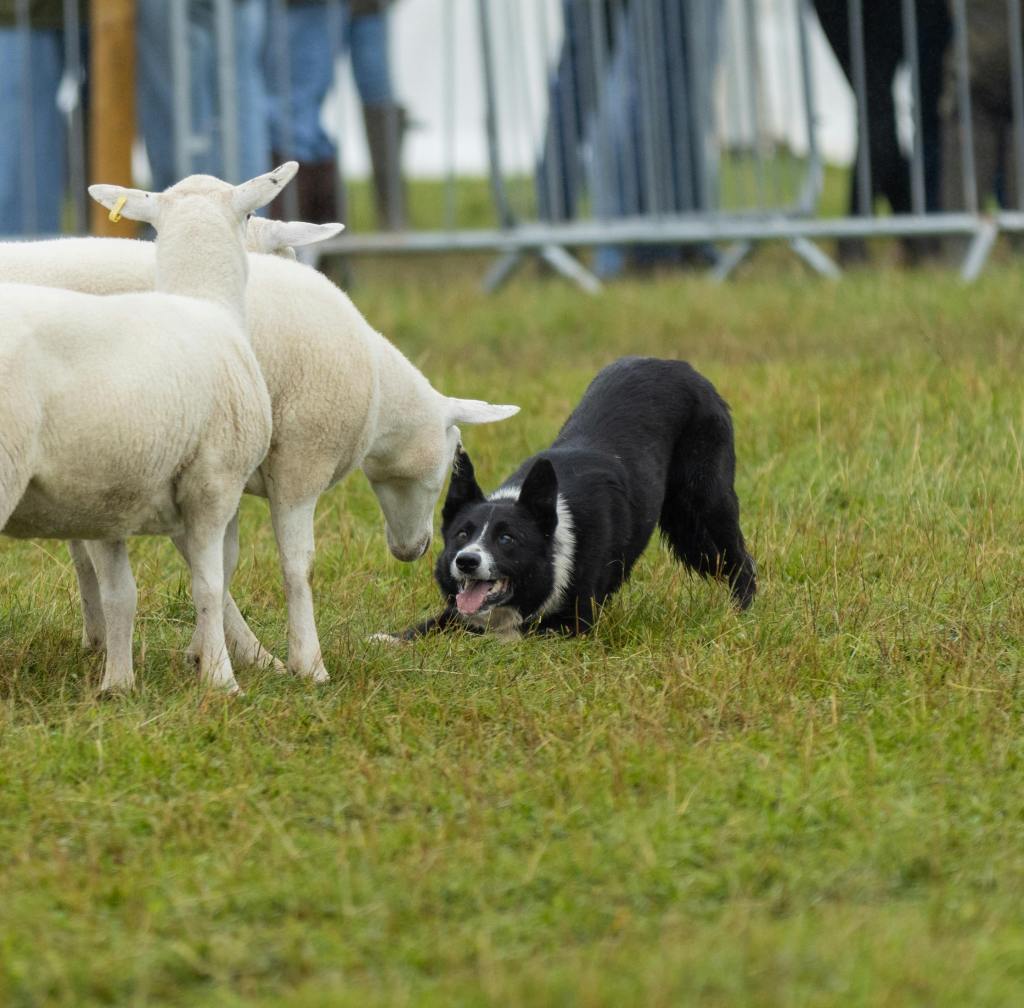
(Photo by Dave Waddicor.)

Now that we’ve gotten the “why” out of the way, let’s explore this sheep metaphor further. Maybe you’re a sheep with wounds too, or maybe you’re a pastor wondering what to do with a hurting sheep, or maybe you’re about to lead a whole new flock with lingering trust issues from the past. Whatever the case, I hope you’ll find this reflection helpful and sense the Lord speaking to your situation.
Tomorrow, we’ll look more closely at the behaviors of wounded sheep, both on the farm and in the church, and how to love them.
Featured Image Source: Biegun Wschodni on Unsplash.
 Michelle Perez
2 thoughts on “Wounded but Not Lost: Understanding Church Wounds and How to Heal (Part 1)”